Winter Taps: How the Off-Season Became Our Favorite Time of Year
If you've spent time in a regional brewery, you know the rhythm. Spring picks up. Summer is a sprint. Fall carries momentum from harvest season and football weekends. And then, somewhere around mid-November, things get quiet.
For a lot of small businesses in tourist-adjacent regions like the Central Coast, that quiet is something to survive. You cut hours, you watch the numbers, you wait for the calendar to turn. We used to think about it that way too.
We don't anymore.
Slow Down to Go Deeper
The shift in thinking happened gradually. We started noticing that some of our best ideas—the recipes that became fan favorites, the events people still talk about, the partnerships that genuinely stuck—came out of the slower months. Not despite the reduced foot traffic, but partly because of it.
When you're not running at full capacity every weekend, you have room to think. The brewing team can take a recipe through multiple iterations without the pressure of needing it ready by Friday. The staff can actually sit down together for more than ten minutes. You can try things that might not work, because a failed experimental batch in January doesn't carry the same stakes as a failed keg in August.
That breathing room is genuinely valuable. We've started treating it that way intentionally.
What We Actually Do in January
Let's get specific, because 'we use the slow season creatively' is the kind of thing every brewery says and not every brewery actually does.
Here's what winter looks like at Santa Maria Brewing Co. in practice:
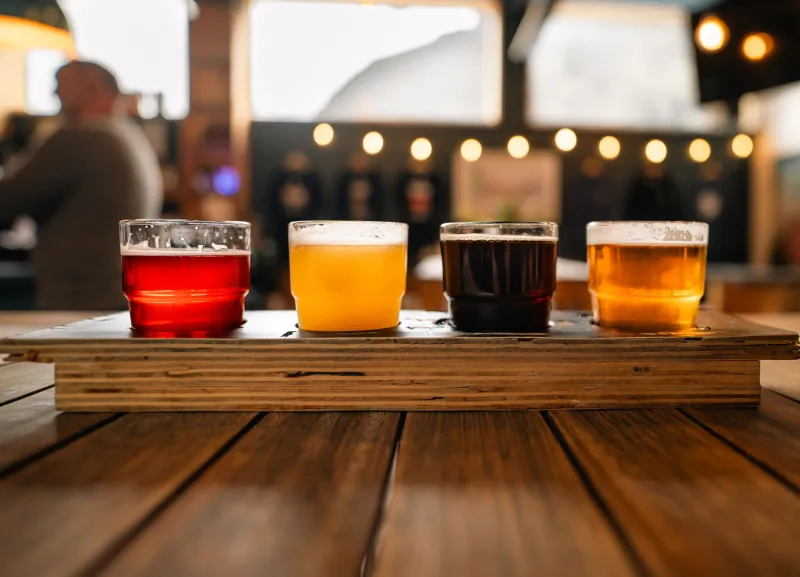
Experimental batch season. The fermenters that would otherwise be running at capacity for demand get freed up for projects that are purely about learning. We've used January and February to test new yeast strains, try out grain bills we'd been curious about for months, and revisit older recipes with fresh eyes. Some of these experiments make it into the tap list eventually. Some of them teach us exactly what not to do, which is equally useful.
Staff education and development. Our team is good at what they do, but there's always more to learn. The off-season is when we carve out real time for cicerone prep, sensory training, and behind-the-scenes education on the technical side of brewing. A bartender who can talk intelligently about water chemistry or fermentation isn't just better at their job—they're more engaged with it.
Community dinners and off-peak collaborations. We've built some of our most genuine local relationships through winter pop-ups and collaborative dinners with Santa Maria Valley restaurants. When the summer crowds are gone, what's left is the actual community—the regulars, the neighbors, the people who live here year-round. Those are often the most honest conversations about what we're doing and what we could do better.
The Partnerships That Only Happen in the Quiet
There's a particular kind of collaboration that's almost impossible to pull off during peak season: the slow-burn, let's-figure-this-out-together kind.
This past winter, we worked with a local restaurant on a pairing dinner that took three planning sessions to put together. We went back and forth on the menu, adjusted which beers we'd pour, argued productively about whether a certain amber ale actually worked with a braised short rib (it did, eventually). That kind of creative friction requires time and attention that summer simply doesn't allow.
We also deepened a sourcing relationship with a small farm in the Santa Maria Valley that we'd been meaning to explore for two seasons. In January, we finally had the bandwidth to drive out, walk the fields, and have a real conversation about what they grow and what we might do with it. That visit led directly to a spring seasonal that we're genuinely proud of.
None of that happens in July.
Events That Belong to the Season
We've also leaned into programming that fits the winter vibe rather than fighting it. Not every event needs to feel like a summer festival. Some of the best taproom experiences are quieter, more intimate, and specifically suited to cold weather and long evenings.
Our winter workshop series—covering topics like homebrew basics, beer and food pairing, and the history of regional brewing styles—draws a crowd that's genuinely there to learn. No one's rushing to get back to the beach. The room has a different energy: curious, unhurried, willing to ask follow-up questions.
We've also done small-batch release events in February that have become something of a cult tradition among our regulars. The beers are experimental, the quantities are limited, and the whole thing has a low-key energy that feels right for the season. People linger. Conversations happen. It's the opposite of the controlled chaos of a summer tap takeover, and a lot of our community members have told us it's their favorite thing we do all year.
Seasonal Rhythm as Identity, Not Inconvenience
Here's the bigger point underneath all of this: a brewery that's genuinely rooted in a place should reflect that place's rhythms. The Central Coast has seasons. The farming calendar has slow periods. The community has a different texture in February than it does in August.
A brewery that only knows how to operate in peak mode—always loud, always at capacity, always performing for the biggest possible crowd—is actually disconnected from the place it claims to represent. The quiet months are part of the story too.
We think about the off-season now as the time when we earn the right to the busy season. The relationships we build in January hold up in July. The recipes we develop in February become the beers people are excited about in May. The staff who grew professionally over the winter are better at their jobs when the taproom is packed.
Slow isn't the opposite of good. Sometimes it's the condition for it.
Come Find Us in the Off-Season
If you haven't visited Santa Maria Brewing Co. between November and March, you're missing a different—and honestly pretty great—version of what we do. The wait for a table is shorter. The staff has more time to talk. The experimental beers are on draft. And the community that shows up is the one that keeps this place going all year long.
The door's open. Come in from the cold.