Brewing from the Dust: Resurrecting the Beer Styles History Almost Swallowed
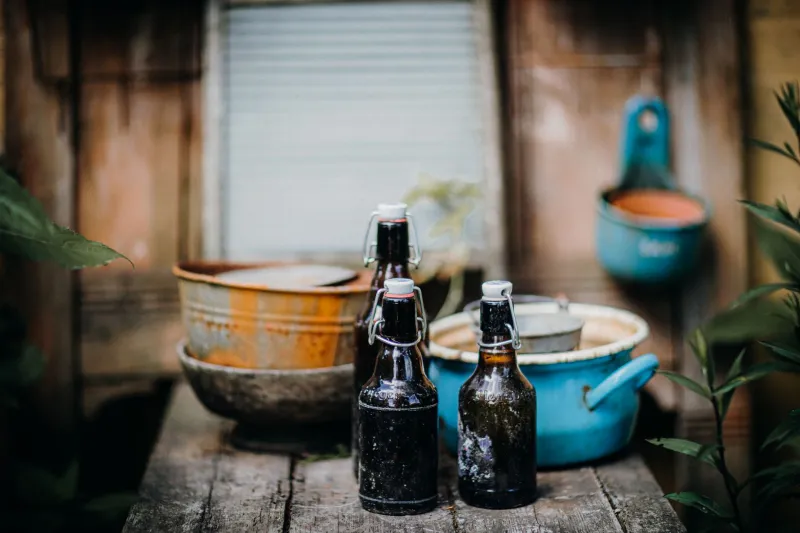
There's a shelf in our brewhouse that doesn't hold hops or grain. It holds books. Old ones, mostly — photocopied pages from 18th-century brewing manuals, printed excerpts from agricultural journals, a dog-eared copy of a British ale taxonomy from the 1800s that one of our brewers found at an estate sale in Paso Robles. That shelf is where a lot of our most unexpected beers are born.
Craft brewing in America has done a remarkable job of celebrating the IPA, the stout, the hazy, the sour. But for every style that found its audience in the modern tap handle era, dozens of others quietly faded out — casualties of industrialization, shifting tastes, or just plain bad timing. We think that's a shame. And we've been doing something about it.
What Does a "Forgotten" Beer Style Actually Mean?
When we talk about forgotten or obscure beer styles, we're not being dramatic. We mean styles that were once genuinely popular — regionally beloved, commercially brewed, culturally significant — and then simply... stopped. Some disappeared because the ingredients they relied on became too expensive or too rare. Others got crowded out when lager swept across America in the late 1800s and homogenized what people expected beer to taste like. A few just got unlucky.
Gruit ales are a good example. Before hops became the near-universal bittering agent in Western brewing, brewers flavored their beers with a blend of herbs and botanicals — yarrow, bog myrtle, wild rosemary, juniper. The resulting beers were earthy, complex, and nothing like what most modern drinkers would recognize as beer. They were also deeply regional, shaped by whatever grew nearby. Sound familiar? That regional character is exactly what drew us in.
Or take Lichtenhainer, a smoked wheat ale with a sharp lactic bite that was brewed in a small corner of Germany for a few centuries before essentially disappearing by the mid-20th century. Or Kentucky Common, a pre-Prohibition American original that was the everyday working-class beer of Louisville before Prohibition wiped out most of the breweries making it. These aren't footnotes. They're full chapters of brewing history that got torn out.
The Research Process: Part Archaeology, Part Experiment
Reviving a dead beer style isn't as simple as finding a recipe and scaling it up. Most historical brewing records weren't written for the purposes of replication — they were written for the brewer who already knew what they were doing. Units of measurement were inconsistent. Ingredient names shifted over time. What a 17th-century English brewer called "pale malt" would look nothing like what we'd pull off a shelf today.
Our head brewer, Marcus, describes the process as "educated guessing with a lot of small-batch testing." The research phase usually starts with primary sources — old brewing texts, agricultural records, even period newspaper advertisements that mention specific beers. From there, the team tries to triangulate: What malts were available in that region at that time? What would the local water profile have looked like? What yeast strains might have been in use, and how do modern equivalents compare?
Then comes the fun part. Small pilot batches, usually five gallons at a time, brewed to test different interpretations of the same style. Some of them are genuinely unpleasant in ways that are historically accurate and commercially useless. Others surprise everyone. A recent attempt at a pre-Prohibition cream ale hybrid hit the pilot taps and got more attention from the taproom staff than anything we'd brewed in months.
Where the Central Coast Changes Everything
Here's the thing about reviving old beer styles: the ingredients are never going to be exactly what they were. And honestly, we've stopped trying to make them exactly what they were. Instead, we ask a different question — what would this style taste like if it had always been made here, on the Central Coast of California?
That reframe opens up a lot of doors. When we brewed our version of a farmhouse saison last spring, we reached out to a lavender grower up near Los Alamos whose dried flowers had been sitting in our walk-in waiting for the right project. The result was a beer that had all the rustic, yeasty character of a classic Belgian-influenced farmhouse ale, but with a floral, almost herbal quality that felt completely native to this place. We called it a farmhouse ale. We could have also called it something new entirely.
Similarly, our take on a historical English mild — a style that was once the most popular beer in Britain and is now a rarity even in the UK — used roasted barley sourced from a small operation in the Santa Ynez Valley. The terroir of that grain, the way it absorbed the coastal climate during its growing season, gave the beer a subtle nuttiness that no English mild we'd ever tasted quite had. That's not a flaw. That's the Central Coast doing what it does.
Why It Matters Beyond the Novelty
We'll be honest — there's a part of this project that's just genuinely nerdy fun. Brewers are curious people, and the idea of making something that almost no one alive has ever tasted is inherently exciting. But there's a more serious reason we keep coming back to these forgotten styles, and it has to do with what we think craft brewing is actually for.
The modern beer landscape is more diverse than it's ever been, but it can also feel oddly narrow. Certain styles dominate tap lists from Portland, Oregon to Portland, Maine. Trends move fast, and breweries that chase them can end up making beers that feel interchangeable. Digging into history is, paradoxically, one of the best ways to make something genuinely original.
It also keeps us honest about our brewing philosophy. We talk a lot about being rooted in this place, in this region, in the rhythms of the Central Coast. But rootedness isn't just geographic — it's temporal. Understanding where beer came from, what it meant to the people who made it and drank it, makes us better at thinking about what our beers mean right now.
What's Coming Out of the Lab
We're not ready to announce everything, but there are a few projects on the pilot system right now that we're genuinely excited about. One is a rye-forward table beer inspired by early American colonial brewing traditions, fermented with a mixed culture that includes a wild strain we've been cultivating for about a year. Another is a revisit of the Lichtenhainer concept, but built around locally smoked grain and a slightly different acid balance that we think will play better with the food culture here — especially given how much we love what smoke does in Santa Maria.
We'll be pouring some of these in limited quantities in the taproom over the next few months. No promises on which ones make it to a wider release — that's the nature of the work. Some batches teach you something and then get retired. Others turn into something you want to brew forever.
Either way, that shelf in the brewhouse keeps getting more crowded. And we wouldn't have it any other way.