What's in the Well: The Hidden Ingredient That Defines Every Beer We Brew
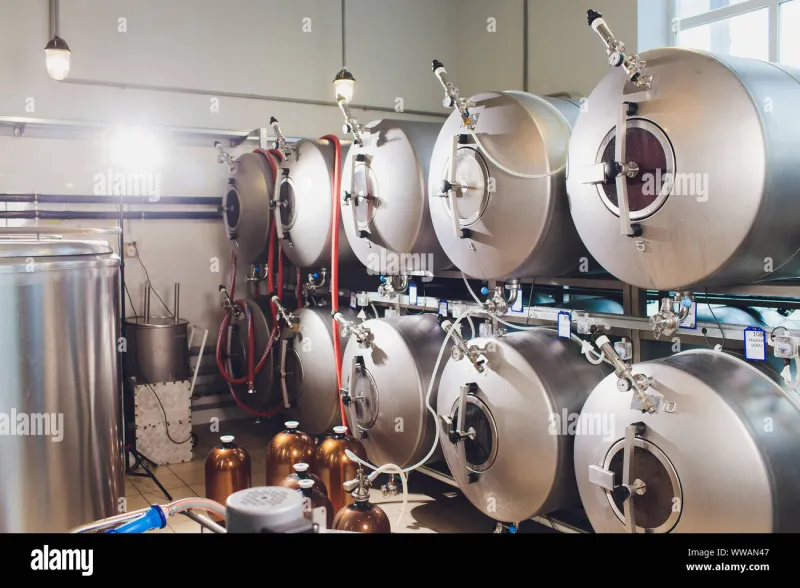
Photo: craft brewery water tanks and brewing equipment close up, via c8.alamy.com
Ask most beer drinkers what makes a craft brew special, and they'll point to the hops, the malt, maybe the yeast. Water? That one usually gets a shrug. But here at Santa Maria Brewing Co., water is where every conversation about flavor starts — and honestly, it's where most of the real magic happens.
The Santa Maria Valley sits on a remarkable stretch of the Central Coast, where the Santa Maria River basin has been filtering and mineralizing groundwater for thousands of years. That process leaves a distinct chemical fingerprint — one that shows up in every glass we fill.
Why Water Chemistry Isn't Just a Technical Detail
Brewers talk about water the way winemakers talk about soil. It's not just a carrier liquid. Water is an active participant in your beer. The dissolved minerals it contains — calcium, magnesium, sulfates, chlorides, bicarbonates — interact with your malt during mashing, influence your hop bitterness, and affect how yeast behaves during fermentation. Change the water, and you change the beer. Full stop.
This is why historically famous brewing cities became famous in the first place. Burton-on-Trent in England built its reputation for pale ales on sulfate-rich water that amplified hop crispness. Dublin's soft, bicarbonate-heavy water made it a natural home for roasty dry stouts. Pilsen, Czech Republic, with some of the softest water on earth, gave the world the delicate lager that bears its name.
Santa Maria's water has its own story to tell — and we've spent years learning how to listen to it.
What the Santa Maria Aquifer Actually Gives Us
The groundwater we draw from in the Santa Maria Valley tends to be moderately mineralized, with a calcium-forward profile and relatively balanced chloride-to-sulfate ratios. Compared to, say, the hard municipal water in many inland cities, our local source water is notably cleaner in terms of total dissolved solids — but it's not blank slate water either. It carries character.
That moderate mineral content is, frankly, a gift. It means we're not starting from a place of excessive hardness that would require heavy treatment just to get to baseline. But it also means we're not working with ultra-soft water that can leave malt-forward beers tasting flat or dull. We're starting from a place of balance, which gives us flexibility.
The surrounding agricultural landscape plays a role here too. The same alluvial soils that make the Santa Maria Valley exceptional for wine grapes and strawberries contribute to how water moves through the ground and what it picks up along the way. Terroir isn't just a wine concept — it's real, and it's measurable in a water chemistry report.
How We Treat and Tailor Our Brewing Water
Sourcing good water is step one. Step two is knowing when and how to adjust it for a specific beer style.
We work with our brewing team to profile every batch, checking mineral concentrations before we build a recipe. For our hop-forward IPAs, we'll often boost sulfate levels slightly — that mineral accentuates dryness and makes hop bitterness feel clean and sharp rather than harsh. For our darker ales and stouts, we lean toward higher chloride content, which rounds out the mouthfeel and lets roasted malt flavors come forward without turning astringent.
Bicarbonate management is where things get especially precise. High bicarbonate levels can raise mash pH in ways that blunt enzyme activity and muddy your final flavor. We keep a close eye on this, especially when brewing lighter styles where clarity — both visual and on the palate — really matters.
None of this involves exotic chemistry. It's mineral salts: calcium chloride, gypsum, magnesium sulfate, lactic acid for pH adjustment. The tools are simple. The skill is in knowing when to use them and in what proportion.
Comparing Notes with Other Craft Brewing Regions
One thing that strikes visitors from Northern California or the Pacific Northwest is how different our starting point is. Portland, Oregon, for example, draws from the Bull Run watershed — famously soft, almost mineral-free water that's excellent for certain styles but requires significant mineral additions to brew many others effectively. San Diego's water, by contrast, tends to be harder and more chlorinated from its imported sources, which is part of why many breweries there invest heavily in reverse osmosis filtration before building their water profiles from scratch.
We sit in an interesting middle ground. Our water is clean enough that we're not fighting it, but mineral-rich enough that it contributes something real to our house character. That consistency matters — it's part of why our flagships taste like our beers and not just competent examples of a style.
The Drought Factor: Water on the Central Coast
It would be dishonest to talk about water in Santa Maria without acknowledging the elephant in the room: California's ongoing relationship with drought and water scarcity. The Central Coast has faced serious water challenges over the past decade, and we take that responsibility seriously.
We've invested in water reclamation systems in our brewing process, capturing and reusing water where possible — particularly in our cooling operations, which are among the most water-intensive parts of any brewery. We track our water-to-beer ratio carefully and work to bring it down year over year. Good brewing and responsible water use aren't in conflict. They push in the same direction.
Being embedded in an agricultural community also keeps this front of mind. Our neighbors are farmers. They understand water the way we do — as something precious, finite, and worth protecting.
Tasting the Difference
Here's the honest truth: most beer drinkers won't pick up their glass and think, "Ah yes, I'm tasting the sulfate levels." And that's fine. The goal isn't to make water chemistry legible — it's to make beer that tastes right, feels right, and couldn't have come from anywhere else.
When you drink one of our pints and feel that clean finish on an IPA, or notice how a stout coats the palate without getting heavy, or appreciate the way a lager just feels crisp without being thin — that's water doing its job. Quietly. Effectively. The way the best ingredients always do.
Next time you're at the taproom, ask us about what's in the glass. We're always happy to talk about it — starting from the ground up.