Fields to Fermenters: How We Build Our Beers from the Ground Up with Central Coast Farmers
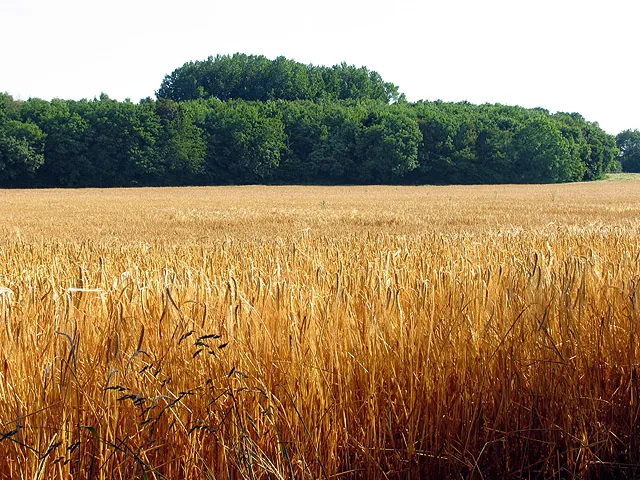
Photo: Pam Brophy, CC BY-SA 2.0, via Wikimedia Commons
There's a conversation that happens every spring around here that most beer drinkers never get to hear. It's the one where we're standing at the edge of a barley field somewhere in Santa Barbara County, talking crop yields and moisture levels with a farmer who's been working this land for decades. No spreadsheets, no purchase orders — just two people figuring out how to make something worth drinking together.
That's the foundation of what we do at Santa Maria Brewing Co. And honestly? It's the part of brewing we're most proud of.
Why Local Sourcing Is Harder Than It Sounds
Let's be straight with you: sourcing ingredients locally isn't the easy path. The commodity malt market exists for a reason. You can pick up a phone, order consistent base malt from a large regional supplier, and have it show up like clockwork. Predictable, affordable, and perfectly adequate.
But adequate has never been the goal here.
Working with smaller, regional farms and maltsters means navigating a whole different set of realities. Harvests vary. A dry spring might mean a lighter barley yield, which means we're adjusting recipe volumes or shifting timelines. A hops grower might have a bumper crop of Cascade one year and a rough go of it the next. There's no safety net of industrial-scale surplus to fall back on.
What you get instead is something a lot more interesting: ingredients with a story, a terroir, and a character that changes from season to season. That variability isn't a bug — for us, it's very much a feature.
The Farmers and Maltsters Behind Our Beers
We've worked hard over the years to identify growers and producers who share our obsession with quality and who understand what we're trying to do. The Central Coast has a surprisingly robust agricultural community, and while wine grapes tend to get all the press, there's serious grain and specialty crop production happening throughout the region.
Our relationships with local maltsters have been especially formative. Small-batch malting is a craft in itself — the process of steeping, germinating, and kilning raw barley transforms it into the sugary backbone that feeds fermentation. When we work with a maltster who's sourcing their grain from farms within a few counties of our brewery, the result is a malt profile that carries something distinctly Californian. A little warmer. A little earthier. Different from what you'd pull out of the Midwest or the Pacific Northwest.
On the hops side, things get even more nuanced. California isn't the Yakima Valley, and we're not trying to replicate what those growers do. The hops cultivated closer to home tend to have their own personality — sometimes subtler, sometimes surprisingly punchy — and learning how to brew around those characteristics has pushed our brewing team to get more creative and more deliberate about every recipe decision.
How the Seasons Shape What's in Your Glass
One of the most direct ways our sourcing philosophy shows up is in our seasonal lineup. When you're tied to what's actually growing and harvested in a given year, your brewing calendar starts to mirror the agricultural calendar in a really organic way.
Late summer and early fall bring fresh hop releases — those window-of-opportunity beers that only exist because we have access to wet, unkilned hops right off the bine. They're intensely aromatic in a way that dried hops simply can't replicate, and they're only possible because we've got a grower willing to coordinate harvest timing with our brew schedule. It's a logistical dance, but the result is one of the most anticipated pours we put out all year.
Winter brews tend to lean into heartier malt profiles, partly because of what's available and partly because that's just what the season calls for. Spring is when we start experimenting with lighter, brighter builds as new crop ingredients come in. The rhythm of it has become something we genuinely look forward to — a kind of agricultural seasonality that keeps our tap list feeling alive and connected to what's happening outside.
Why It Matters Beyond the Flavor
We'd be telling only half the story if we talked about local sourcing purely in terms of taste. The other half is about what kind of business we want to be and what kind of community we want to support.
Santa Maria and the broader Central Coast have a deep agricultural identity. Farming is woven into the history of this valley — from the strawberry fields to the vineyards to the row crops that have fed California for generations. When we buy barley from a family farm or work with a small maltster who's trying to build something sustainable, we're participating in that tradition. We're keeping money circulating in the regional economy. We're helping diversify the market for local grain producers who might otherwise have limited options.
That's not a marketing talking point for us — it's a genuine commitment. And it's one that our customers have responded to. When people come into the taproom and hear that the malt in their pint came from a farm a couple hours away, there's a connection that forms. Beer becomes less abstract. It becomes part of a place.
The Ongoing Work of Building These Relationships
We want to be clear that this isn't a finished project. Building a reliable, high-quality local supply chain for brewing ingredients is ongoing work. We're constantly having conversations with new growers, evaluating experimental hop varieties being trialed in the region, and figuring out how to structure agreements that are fair and workable for farmers who are already managing a hundred other variables.
Some experiments don't pan out. We've worked with ingredients that sounded great on paper and didn't translate the way we hoped in the fermenter. That's part of it. The learning process is baked into the philosophy.
But when it works — when a seasonal release comes together and you can taste the specific combination of Central Coast soil, sun, and water in the finished beer — there's nothing quite like it. That's the pint we're always chasing.
Next time you're at the taproom, ask your bartender what's local in whatever's on draft. We love talking about it. And if the answer is "almost everything" — well, that's exactly where we're trying to be.