Meet the Microbes: How Yeast Shapes Every Pint We Brew in Santa Maria
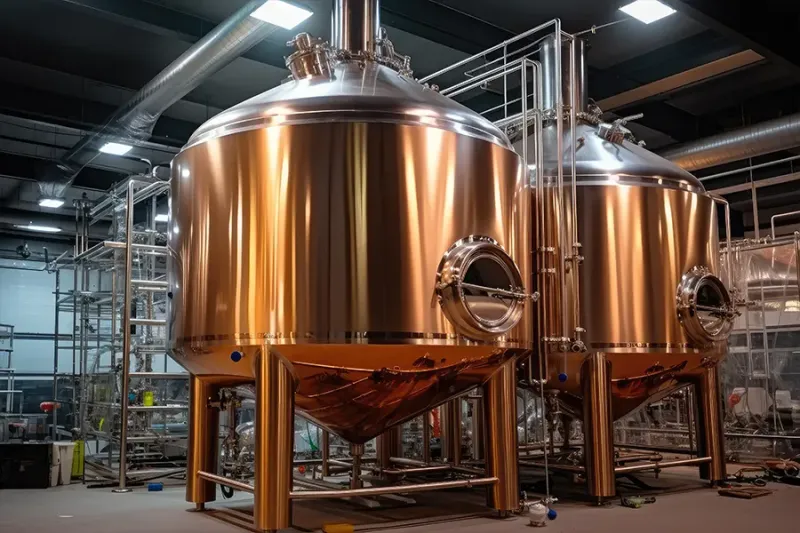
Photo: craft brewery yeast fermentation tanks close up brewing process, via prodebbrewery.com.au
There's a running joke among our brewing crew that yeast deserves a seat at the tasting table. Not because it has opinions — though sometimes it seems like it does — but because without it, everything we do here at Santa Maria Brewing Co. is just sweet grain water. Yeast is the thing that makes beer beer. And the specific strain we choose for each batch? That's where the real storytelling begins.
Most folks walk into our taproom thinking about hops or malt. Fair enough. Those ingredients are visible, smellable, tangible. But yeast operates in the shadows — invisible to the naked eye, quietly converting sugars into alcohol and carbon dioxide, and along the way, producing an enormous range of flavor compounds that define a beer's personality more than almost anything else.
So let's pull back the curtain a little.
What Yeast Actually Does (In Plain English)
Yeast is a single-celled fungus. When it encounters fermentable sugars — the kind that come from malted barley after it's been mashed with hot water — it eats those sugars and produces alcohol, CO2, and a whole cocktail of byproducts called esters and phenols. Those byproducts are flavor. They're the banana notes in a Hefeweizen, the spicy clove character in a Belgian Tripel, the clean crispness in a West Coast IPA.
Different yeast strains produce different amounts and types of these compounds. Temperature, pitch rate (how much yeast you add), oxygen levels, and fermentation time all influence how a strain behaves. Which means that choosing a yeast strain isn't a one-and-done decision — it's the beginning of an ongoing conversation between the brewer and the organism.
Our head brewer, Marcus, describes it this way: "It's like hiring a co-writer. You give yeast the raw material, and it tells you what kind of story you're going to end up with. Sometimes it surprises you."
The Strains We Reach For Most
At Santa Maria Brewing Co., we work with a rotating cast of yeast strains depending on the style we're chasing. Here are a few that come up again and again in our brewing conversations.
California Ale Yeast (WLP001 / US-05) This one is the workhorse. Clean, neutral, highly attenuative — meaning it ferments out most of the available sugars and leaves behind a dry, crisp finish. We lean on this strain for our hop-forward ales, where we want the Central Coast's citrusy, piney hops to do the talking without yeast flavors getting in the way. When you taste our flagship IPA and you're getting pure Citra and Mosaic without any background noise, that's this strain doing its job quietly and well.
Belgian Wit Yeast (WLP400) This is where things get expressive. Belgian strains are known for producing fruity esters and spicy phenols — that combination of orange peel, coriander, and soft wheat that makes a witbier feel like a warm afternoon. We use this strain seasonally, and every time we do, the fermentation room smells incredible. Marcus calls it "the most talkative yeast we work with." It has opinions. You have to manage fermentation temperatures carefully or it'll run wild on you.
German Hefeweizen Yeast (WLP300) If you've ever had a proper Hefeweizen and noticed that unmistakable banana-and-clove combination, you've met this strain's handiwork. The balance between those two flavor profiles — isoamyl acetate for banana, 4-vinyl guaiacol for clove — is entirely temperature-dependent. Ferment warmer, you get more banana. Ferment cooler, clove takes over. It's one of the most dialed-in relationships between process and flavor in all of brewing, and it's endlessly fascinating to play with.
Kveik Strains This is where we get a little adventurous. Kveik is a family of traditional Norwegian farmhouse yeasts that have been making serious waves in the American craft brewing world over the last several years. These strains are heat-tolerant — they can ferment at temperatures that would stress out most conventional yeasts — and they work fast. Some kveik strains can fully ferment a beer in 48 to 72 hours. For us, Kveik is an opportunity to experiment with fruity, tropical flavor profiles without adding a single piece of fruit. Our brewer Jess has been particularly obsessed with a Voss kveik strain that throws off flavors of orange and grapefruit. "It almost feels like cheating," she says. "But it's completely natural."
Yeast Selection as Creative Identity
Here's the thing about yeast that doesn't get talked about enough: choosing a strain is a deeply personal decision. It reflects a brewer's palate, their philosophy, and what they want a beer to communicate.
At Santa Maria Brewing Co., we think a lot about place. The Central Coast has its own identity — the marine layer that rolls in off the Pacific, the agricultural richness of the Santa Maria Valley, the laid-back pace of life that somehow coexists with serious wine and food culture. We want our beers to feel like they belong here. That means making choices at every step of the brewing process that reinforce a sense of character and intention.
For Marcus, yeast selection is no different from how a chef chooses their fat — butter versus olive oil versus lard — knowing that the choice will subtly but unmistakably shape the finished dish. "You can have the same vegetables, the same seasoning, the same technique," he says, "but change one foundational element and you've got a completely different experience on the plate. Yeast is our foundational element."
Keeping It Healthy: The Care and Feeding of a Yeast Culture
Yeast isn't just chosen once and forgotten. It's maintained, repitched, monitored, and occasionally retired. Healthy yeast produces clean, consistent fermentations. Stressed yeast produces off-flavors — the kind that make a beer taste harsh, sulfuric, or just plain wrong.
We store our working cultures cold, repitch yeast from batch to batch within safe generation limits, and regularly check viability under a microscope. Yes, an actual microscope. It's one of those moments in the brewery that reminds you how much science is quietly running underneath the craft.
When a culture starts showing signs of stress — slower fermentations, inconsistent attenuation, flavor drift — we retire it and bring in a fresh pitch. It's not sentimental, but it is respectful. You take care of your yeast, and your yeast takes care of your beer.
The Invisible Made Visible
Next time you're sitting at our taproom on a sunny Central Coast afternoon, pint in hand, take a second to think about the billions of microscopic organisms that got you there. They worked fast, they worked hard, and they made a whole lot of decisions you'll never fully see.
But you'll taste them. You always taste them.
That's the magic of yeast — and it's one of the reasons we never get tired of brewing.