Charting New Waters: How Columbus's Flagship Became the Spirit Behind Our Brewing
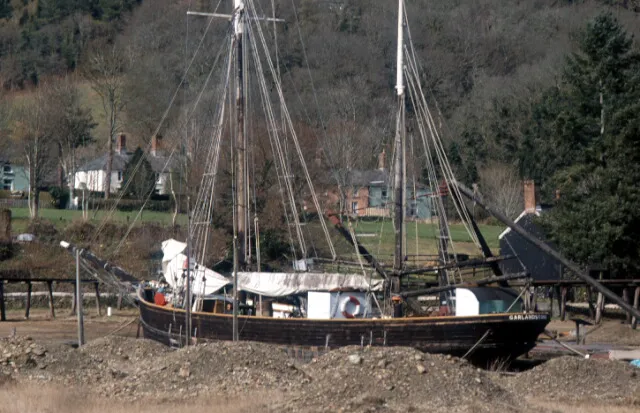
Photo: Patrick GUEULLE, CC BY-SA 2.0, via Wikimedia Commons
In 1492, a wooden carrack called La Santa María pushed off from the Spanish port of Palos de la Frontera and sailed into the unknown. No GPS. No guarantee of return. Just a crew, a captain, and an almost reckless willingness to find out what was on the other side of the horizon. Over five centuries later, a small craft brewery in California's Central Coast borrowed that name — and everything it stands for.
We're not historians. We're brewers. But the story of the Santa María lives somewhere in the DNA of everything we do, from the first grain bill we sketch out on a whiteboard to the moment a new beer hits the taps for the first time. If you've ever wondered why we approach brewing the way we do — with one foot in tradition and the other dangling off the edge of the map — this is where that impulse comes from.
A Ship Named for Discovery
The original Santa María was, by most historical accounts, not a glamorous vessel. She was sturdy, practical, and a little slow compared to the nimbler Niña and Pinta that sailed alongside her. But she was the flagship — the one that carried the vision forward. Columbus himself commanded her, and when she ran aground off the coast of Hispaniola on Christmas Day 1492, her timber was reportedly used to build the first European settlement in the Americas.
There's something poetic in that. A ship that didn't survive the journey still managed to build something lasting. That tension between risk and legacy is something our head brewer, Marcus, thinks about more than you'd expect.
"When we named the brewery, we weren't just nodding to local geography," Marcus told us during a recent conversation in the brewhouse. "We were making a statement about how we want to operate. Exploration isn't comfortable. It's not supposed to be. The Santa María didn't sail with a safety net, and honestly, the beers we're most proud of didn't get made by playing it safe either."
The Parallel Between Seafaring and Craft Beer
It sounds like a stretch until you spend a few hours in a working brewery. The parallels are actually kind of hard to ignore.
Consider what Columbus's crew was doing: working with limited resources, reading environmental signals they didn't fully understand, making judgment calls that couldn't be undone. Sound familiar? Every brew day involves a version of that. Water chemistry shifts. Fermentation temperatures drift. A hop harvest comes in with different characteristics than last year's. A brewer's job is to read those variables and navigate toward something worth drinking.
"The ocean doesn't care about your plan," said Jamie, one of our fermentation specialists, laughing. "And neither does yeast, honestly. You set the course, you monitor conditions, but there's always a point where you just have to trust the process and see where it goes."
That philosophy shows up most clearly in our experimental small-batch program, which we've started thinking of internally as the "Open Water" series. These are beers with no guarantee of becoming regulars — they're test runs, explorations, one-off voyages into flavor territory we haven't charted yet. Some of them graduate to the main lineup. Some of them teach us something valuable and then disappear. A few have been genuinely strange. All of them have been worth making.
What the Flagship Actually Means to Us
When people ask about our flagship beer, they're usually asking about a specific pour — the one that defines us, the one that shows up on every flight, the one that first-time visitors are pointed toward. But the word "flagship" carries more weight around here than it might at other breweries.
A flagship isn't just the most popular beer. It's the one that carries the identity of everything else. It's the Santa María of the lineup — the standard-bearer, the vessel that holds the philosophy afloat even as the other beers in the portfolio take risks and push boundaries.
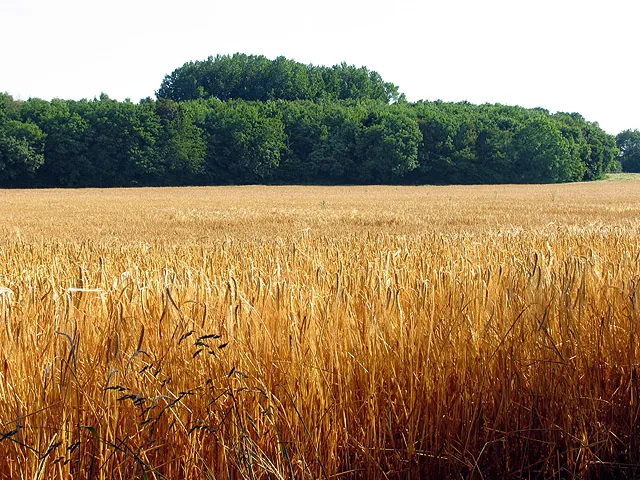
Our flagship California Pale Ale is built on that idea. It's approachable, balanced, and consistent — qualities you'd want in a ship crossing an ocean. But look closer and you'll find Central Coast barley, local water, and a dry-hop profile that's been refined through years of small adjustments. It's not a simple beer pretending to be complex. It's a carefully navigated one.
"We want someone to drink that pale ale and immediately understand what we're about," Marcus explained. "Grounded in this place, curious about what's possible, not trying to be flashy but not cutting corners either. That's the Santa María to us."
Exploration Without Losing the Shore
One thing Columbus's voyage gets right as a metaphor — and one thing we try to hold onto as brewers — is that exploration isn't about abandoning where you came from. The Santa María left a known world and found an unknown one, but the goal was always to bring something back. Knowledge, connection, possibility.
We feel that way about the Central Coast. This region is our port of origin and our reason for being. The agriculture, the climate, the fog that rolls in off the Pacific and keeps our fermentation temperatures honest — all of it is home base. Every experimental beer we make is an attempt to carry something of this place into new territory and see what it becomes.
That might mean a barrel-aged sour that started with locally grown stone fruit. Or a lager conditioned longer than anyone told us was practical. Or a collaboration with a Central Coast winemaker that shouldn't work on paper but absolutely does in the glass.
"We're not trying to be something we're not," Jamie said. "But we're also not interested in making the same beer forever just because it's safe. The Santa María didn't turn around when the water got deep."
Come Sail With Us
If you've made it this far, you probably understand why a 500-year-old ship still matters to a brewery in Santa Maria, California. It's not about history for history's sake. It's about the spirit that drives people — and brewers — to push past what's comfortable and find out what's waiting on the other side.
Next time you're in, pull up a stool and try something you haven't had before. Ask about what's new on the experimental tap. Let us pour you something we're not entirely sure about yet. That's where the good stuff usually lives — just past the edge of the map, somewhere between what we know and what we're still figuring out.
The Santa María never made it home. But everything it set in motion did. We think about that a lot.